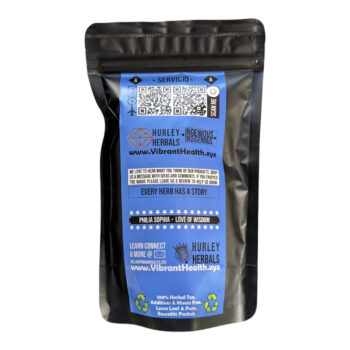
Whole Dried Lotus FlowerNelumbo nucifera Gaertn.
The entire flower of the sacred lotus, dried whole rather than stripped to loose petals. Soft, honeyed and floral in the cup, and striking enough on the saucer that most people photograph it before they brew it.
Specimen Nelumbo nucifera · Nelumbonaceae
Part Whole flower, sun-dried
Origin Thailand
Bloom temp, living plant 30–36 °C held 2–4 days
Recorded seed viability ~1,300 years
The short version
- What is it?
- Whole dried flowers of Nelumbo nucifera, the sacred lotus — the complete bloom, not loose petals.
- What does it taste like?
- Soft and floral with a honeyed edge and no bitterness. Pale blush liquor. Delicate — it will not fight a strong base tea.
- Which lotus is it?
- Sacred lotus is Nelumbo nucifera — a different species from blue lotus (Nymphaea caerulea). Check the botanical name on any lotus you buy.
- What is it used for?
- Loose infusion hot or iced, tea blending, edible garnish and confectionery, and botanical display work.
Choose your size
Sacred Lotus Flower, Whole Dried
Intact sun-dried blooms of Nelumbo nucifera, grown in Thailand. Soft, honeyed, floral. For infusion, garnish and botanical work.
Top-grade selection only — broken and fragmentary blooms are graded out before packing, not averaged in. This is not petal fragment.
| 15 g | £7.95 | Add |
|---|---|---|
| 50 g | £24.95 | Add |
| 500 g | £199.95 | Add |
| 1 kg | £349.95 | Add |
Price per gram
Every size step lowers the unit price. The 1 kg works out a third cheaper per gram than the 15 g trial pack.
| Size | Price | Per gram | Saving vs 15 g |
|---|---|---|---|
| 15 g | £7.95 | £0.530 | — |
| 50 g | £24.95 | £0.499 | 5.8% |
| 500 g | £199.95 | £0.400 | 24.5% |
| 1 kg | £349.95 | £0.350 | 34.0% |
Product information
- Legal name
- Whole dried sacred lotus flowers
- Ingredients
- Dried Nelumbo nucifera flower (100%)
- Country of origin
- Thailand
- Net quantity
- 15 g / 50 g / 500 g / 1 kg
- Allergens
- No allergens listed in Schedule 2 of the Food Information Regulations 2014 are present.
- Storage
- Store in a cool, dry place away from direct sunlight. Reseal after opening.
- Best before
- See pack
- Sold by
- Seller Republic Ltd, C/O Aardvark Accounting, 1 Cedar Office Park, Cobham Road, Wimborne, England, BH21 7SB
Free delivery, and 14 days to change your mind
Delivery
Free delivery on every order to UK addresses. Orders are dispatched once payment clears.
Whole dried blooms are very light for their volume, so the 500 g and 1 kg sizes travel as bulky parcels. That does not change the price you pay.
Returns
You have 14 days from delivery to tell us you want to return an order, and a further 14 days to send it back.
- Packs must be unopened and seals intact. This is a food product, and once a seal is broken it cannot be resold or returned on hygiene grounds.
- Refunds go back to the account you paid from, within 14 days of us receiving the goods.
- Return postage is yours to cover unless the item arrived damaged, incorrect, or not as described — in which case we cover it.
- Damaged in transit? Photograph it before returning anything and email hello@herbalhurleys.co.uk. We will sort it without a return trip where we can.
None of this affects your statutory rights.
What sacred lotus actually is
Nelumbo nucifera is an aquatic perennial that roots in the mud of ponds, lakes and slow rivers and pushes its leaves and flowers clear of the water on long stalks.
It sits in its own botanical family, Nelumbonaceae — which is worth pausing on, because almost everyone gets this wrong. The sacred lotus is not a water lily. It is not in Nymphaeaceae. The resemblance is superficial convergence: two unrelated lineages arriving at the same solution for living in shallow water.
The leaves are peltate — the stalk joins in the centre of the blade rather than at the edge, like a parasol. A mature leaf can span the width of a dinner table. The flower opens over several mornings and closes each afternoon, and when the petals fall it leaves behind a distinctive flat-topped seed head that looks like a shower rose.
Almost every part of the plant is put to use somewhere in Asia. The rhizome is a vegetable. The seeds are eaten fresh, dried, candied and ground. The leaf wraps food. The petals are eaten and infused. The stamens are dried and blended into tea.
Names you will see on this plant
| Botanical | Nelumbo nucifera Gaertn. |
|---|---|
| Family | Nelumbonaceae |
| English | Sacred lotus, Indian lotus, East Indian lotus |
| Chinese | 蓮 / 莲 lián; leaf: 荷叶 hé yè |
| Sanskrit | padma, kamala |
| Hindi | kamal |
| Japanese | hasu |
| Vietnamese | sen |
Older English sources call it the "Egyptian bean" or "Chinese water lily" — both misnomers. It is also a different species from blue lotus, Nymphaea caerulea. Every batch we pack is verified as Nelumbo nucifera.
Why whole, and not loose petals
Most dried lotus on the market is petal fragment — the cheap by-product of grading. We buy and pack the intact bloom. It costs more, it takes more room, and it is a completely different product in the cup and on the plate.
In the cup
A very pale blush liquor with a soft floral nose and a honeyed finish. No astringency, no bitterness, nothing to over-extract — which makes it unusually forgiving if you forget it on the counter.
Because the flower is whole, the calyx, stamens and petal bases all contribute. Stripped petals give you a thinner, flatter cup.
On the plate
An intact dried lotus bloom holds its architecture — layered petals, visible stamens, the flat seed receptacle at the centre. It is a display object as much as an ingredient.
That is why it sells into confectionery, cocktail work, resin and candle craft and botanical styling, not just tea.
What to expect
Colour runs cream through dusty rose depending on cultivar and harvest. Size varies. Some petal fracture in transit is unavoidable on a whole dried bloom and is not a defect.
If a pack arrives substantially powdered, tell us and we will replace it.
Five thousand years of continuous use
Few plants have been written about, painted, carved and eaten as consistently, and for as long, as the sacred lotus.
It has been cultivated in China for something close to five millennia, and virtually every part of the plant — seed, rhizome, leaf, stalk, petal, anther, pericarp and receptacle — has a documented place in the food and materia medica traditions of the region. Lotus cultivation in the great basins of north-eastern China evidently predates the written record for the area.
Its cultural weight is heavier still. In Hindu and Buddhist iconography the lotus is the standard emblem of purity emerging unstained — the plant that grows out of pond silt and opens perfectly clean above it. That single image carries into architecture, textiles, coinage and language across most of southern and eastern Asia. It is the national flower of both India and Vietnam.
In the kitchen, the leaf has an old and specific job: it is the wrapper. Glutinous rice parcels steamed in lotus leaf — lo mai gai in Cantonese dim sum, and the many regional forms of zongzi — take a distinct grassy perfume from the leaf during steaming. The leaf is not merely a container; it is edible and it is an ingredient.
Three things that are true and slightly unbelievable
- A seed germinated after roughly 1,300 years. Fruits recovered from a dry lakebed at Xipaozi, near Pulandian in Liaoning Province, were directly radiocarbon-dated — the oldest at about 1,300 years — and still germinated, at a rate of around 84%. The tough pericarp enclosing the seed, plus unusually heat-stable proteins, appear to be why.
- The flower heats itself. Lotus flowers are thermogenic and actively thermoregulate. A 42 g flower holds itself between roughly 30 and 36 °C for two to four days while the air around it swings between about 10 and 45 °C, burning carbohydrate to produce up to a watt of heat.
- The leaf named a branch of materials science. The microscopic sculpture of the lotus leaf surface makes water bead into near-spheres that roll off and carry dirt with them. The self-cleaning behaviour is known in the literature as the "lotus effect", and it is the reference case for superhydrophobic surface engineering.
How to use it
There is no bitterness to over-extract, so lotus flower is hard to get wrong. The only real mistake is drowning it under a strong base tea.
Hot infusion
- One flower per pot Around 300–400 ml. For a single mug, break a bloom and use roughly half.
- Water off the boil About 80 °C, as you would treat a white tea. A rolling boil flattens the aroma.
- Steep 4–6 minutes Longer does no harm. There is nothing harsh waiting at the far end.
- Re-steep A whole bloom will give a second, softer infusion. Many people prefer it.
Cold infusion & iced
- Two blooms per litre Cold water straight from the tap.
- Refrigerate overnight Eight hours or so gives a very clean floral water.
- Strain and serve Over ice, with lemon or cucumber. It also makes an elegant base for a spritz.
- Blending Keep lotus to roughly 10–15% by weight in any blend, or the base will bury it.
Blending
Sits comfortably with white tea, green tea, jasmine, chrysanthemum, rose and lemongrass. It takes citrus peel well. Avoid pairing with anything heavily spiced or smoked — it simply disappears.
Garnish & confectionery
Used whole on desserts and cakes, set into chocolate work, and floated in cocktails. Brittle when dry — brush lightly with warm water or sugar syrup to make petals pliable for shaping.
Botanical craft
Whole blooms hold their form well in resin, candles, soap and pressed botanical work, and are used in dried arrangements and styling. Keep them sealed and dry until the moment they are used.
Storage
Airtight, out of direct light, at room temperature. Lotus flower is hygroscopic and will go limp and lose colour if left open in a humid kitchen. Do not refrigerate.
What you are actually buying
Dried botanicals are an easy category to be careless in. Species get substituted, harvests get blended, and "lotus" on a label can mean four different plants.
- Species verified on intake. Every batch is confirmed as Nelumbo nucifera before it is packed. We do not accept mixed-genus lots, and we do not substitute Nymphaea for Nelumbo.
- Single origin, single harvest. Thai grown, and each pack is traceable to one harvest window rather than pooled across seasons.
- Nothing added. No anti-caking agents, no colour, no added aroma, no oil sprayed on to make the leaf glossy.
- Sorted by hand. Broken and fragmentary blooms are graded out before packing rather than averaged in.
On natural variation
Lotus is an agricultural crop, not a manufactured product. Colour shifts between cream and dusty rose depending on cultivar, harvest timing and drying conditions. Bloom size and aroma intensity vary between lots.
We do not correct for any of this. A perfectly uniform batch of dried botanical, season after season, is usually a sign that something has been done to it.
Why this page does not tell you what lotus is "good for"
This page tells you what lotus is, what it tastes like and what to do with it — and nothing about what it might do for you. That is deliberate.
UK law permits only formally authorised health claims on a food, in their authorised wording, and claims covering botanical ingredients have sat unresolved for over a decade. Present a food as though it treats a condition and it legally stops being a food. So we don't hint, imply, or dress folklore up as fact.
What you get instead: a correctly identified species, a single origin, an honest description of how it tastes, and a straight answer to any question you ask us.
Suitability. As with any herbal infusion you have not drunk before: if you are pregnant or breastfeeding, taking prescribed medication, or managing an existing condition, speak to your GP or pharmacist before adding it to your routine. This product is a food and is not intended to replace a varied diet or medical advice. Not intended for children.
Frequently asked
Is sacred lotus the same as blue lotus?
No. Sacred lotus is Nelumbo nucifera, in the family Nelumbonaceae. Blue lotus is Nymphaea caerulea, a true water lily in the family Nymphaeaceae. They are different plants from different continents with different regulatory positions. We sell sacred lotus only.
Can I return it if I change my mind?
Yes, within 14 days of delivery, provided the pack is unopened with the seal intact. Once a food seal is broken the pack cannot be returned on hygiene grounds. Return postage is yours to cover unless the order arrived damaged, incorrect or not as described.
Where is your lotus grown?
Thailand. Each pack comes from a single harvest lot rather than being pooled across seasons or regions.
What does whole dried lotus flower taste like?
Soft, floral and honeyed with no bitterness at all. The liquor is a very pale blush. It is delicate, so it will be overwhelmed if you blend it into a strong or smoky base tea.
Whole flowers or loose petals — does it matter?
Yes. A whole bloom brings the calyx, stamens and petal bases as well as the petals, which gives a rounder cup than stripped petal alone. It also holds its shape, which is why whole flower is what gets used for garnish, confectionery and display work.
How many flowers are in a pack?
It varies, because bloom size varies with cultivar and harvest. Packs are sold by weight, not by count — 15 g, 50 g, 500 g and 1 kg. Whole dried flowers are very light for their volume, so a small weight fills a surprisingly large bag.
Some petals arrived broken. Is that a fault?
A whole dried bloom is about as robust as tissue paper, so a degree of fracture in transit is normal and we pack to minimise it. If a pack arrives substantially powdered rather than intact, contact us and we will replace it.
Does lotus flower tea contain caffeine?
No. Nelumbo nucifera is not a caffeine-producing plant, so the flower contributes no caffeine. If you blend it with a true tea (Camellia sinensis), the caffeine comes from that.
How much lotus flower should I use?
One whole bloom per 300–400 ml pot, at around 80 °C for 4 to 6 minutes. For a single mug, break a bloom and use roughly half. For cold infusion, two blooms per litre overnight in the fridge.
Why does the colour vary between orders?
Because it is a crop. Cultivar, harvest window and drying conditions all shift the colour of both leaf and petal. We do not blend across seasons or correct the appearance, so you will see honest lot-to-lot variation.
Why doesn't this page describe any health benefits?
Because UK law does not permit us to. Only authorised health claims may be used on a food, in their authorised wording, and claims about botanical ingredients are in a long-running unresolved state. Presenting a food as though it treats or prevents a condition would make it an unlicensed medicine. We would rather explain that plainly than gesture at it with hints and testimonials.
Is it suitable during pregnancy, or alongside medication?
We are not able to give you individual advice on that. As with any herbal infusion you have not had before, if you are pregnant or breastfeeding, taking prescribed medication, or managing an existing condition, please check with your GP or pharmacist first.
How should I store it and how long does it keep?
Airtight, cool, dark and dry — not in the fridge. Lotus flower absorbs moisture from the air readily and will lose fragrance and colour if left open. See pack for the best-before date.
Correctly identified. Honestly described.
Two parts of one remarkable plant, sold for what they are — a clean grassy leaf and a soft floral petal — with no claims attached and nothing hidden in the ingredients list.
Buy now